

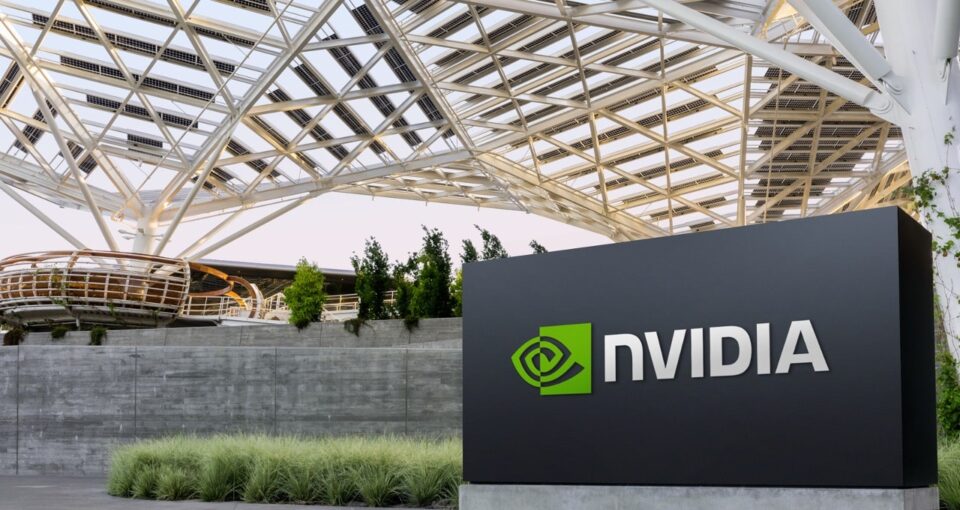
NVIDIA Corporation, founded in 1993 and headquartered in Santa Clara, California, has evolved from a pioneering graphics chip maker into the global leader in accelerated computing and artificial intelligence (AI). Best known for inventing the modern GPU in 1999, NVIDIA today underpins the world’s fastest AI systems, data centers, gaming platforms, professional graphics workflows, and autonomous machines — shaping the modern AI era.
Data Center & AI: NVIDIA’s GPUs — including the H100 and H200 — and networking platforms power large language models, generative AI applications, and cloud AI infrastructure used by tech giants and research institutions worldwide.
Gaming: The GeForce series remains a cornerstone of PC gaming hardware, paired with services like GeForce NOW for cloud gaming.
Professional Visualization: NVIDIA’s RTX and Quadro graphics solutions are widely adopted for complex rendering, simulation, and media production workflows.
From GPUs to AI Computing Leadership
NVIDIA was co-founded by Jensen Huang, its longtime CEO and President, who has guided the company’s transformation from a specialist in graphics chips to a dominant force in AI hardware and software. Under his leadership, NVIDIA became the first company to surpass a $5 trillion market valuation, driven by unprecedented global demand for AI infrastructure.
Financial Milestones and Growth
NVIDIA has posted astronomical revenue growth amid the AI boom. In its fiscal year 2025, the company recorded $130.5 billion in total revenue, more than doubling year-on-year and cementing its status as one of the world’s most financially powerful tech firms.
Data center solutions form the lion’s share of this growth — driven by AI training and inference demand — even as revenue from gaming, professional visualization, and automotive segments also contribute to the company’s broad portfolio and resilience.
Driving the AI Ecosystem Forward
At the heart of NVIDIA’s influence is its CUDA platform, a parallel computing architecture that enables developers to accelerate AI, graphics, and scientific workloads across a wide range of applications. The company’s Omniverse platform builds on this foundation, enabling digital collaboration, simulation, and industrial scale automation in sectors from manufacturing to architecture.
NVIDIA’s commitment to expanding the AI ecosystem is further reflected in strategic investments and partnerships. Recent moves include deeper financial commitments into cloud data center provider CoreWeave, strengthening its position in the AI infrastructure stack.
NVIDIA is also pushing into next-generation processing technologies — including the standalone availability of Vera CPUs — highlighting its ambition to broaden compute platforms beyond GPUs and address evolving AI workloads.
Real-World Impact Across Industries
NVIDIA’s technologies are now deeply embedded in numerous sectors:
- Healthcare: AI-accelerated drug discovery, medical imaging, and personalized treatment planning.
- Scientific Research: Simulating complex systems, climate modeling, and high-performance computing research.
- Robotics & Automation: Intelligent perception, motion planning, and industrial automation powered by AI models and GPUs.
- Autonomous Vehicles: Platforms like DRIVE support safety, perception, and decision-making systems in next-generation vehicles.
Leadership and Future Direction
With over 36,000 employees worldwide, NVIDIA continues to expand its global footprint and influence across technology domains. Its strategic investments, partnerships, and innovations underpin industry transitions toward agentic AI, reasoning AI, and AI-enabled infrastructure — with projections that data center AI infrastructure revenue could reach levels far beyond current scales.
CEO Jensen Huang’s vision of AI as the foundation of the next major computing era — likened to the “largest infrastructure buildout in human history” — reflects NVIDIA’s ambition to lead not just in chips but across the entire AI value chain
