
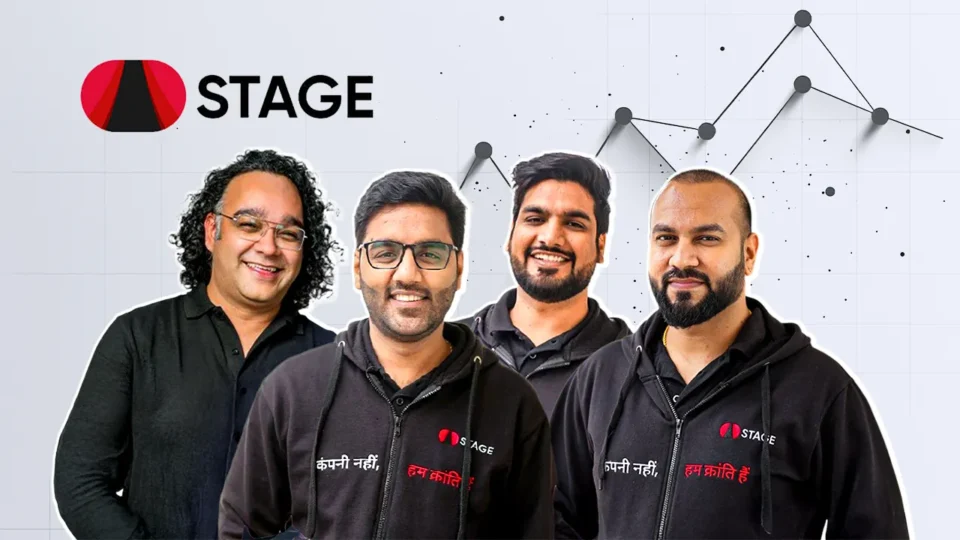
Regional language-focused OTT platform Stage delivered explosive growth in the financial year ending March 2025, scaling its revenue more than sixfold and surpassing the ₹100 crore milestone for the first time. However, the rapid expansion came at a cost, with losses widening by 27% during the same period.
According to financial filings accessed from the Registrar of Companies (RoC), Stage’s revenue from operations surged 6.2X to ₹111 crore in FY25, compared to ₹18 crore in FY24. The company’s aggressive subscriber acquisition strategy and regional content push significantly boosted its top line.
Subscription-Driven Business Model Powers Growth
Founded in 2019, Stage operates as a subscription-first regional OTT platform, offering original shows and films in languages such as Haryanvi, Rajasthani, and Bhojpuri. The company positions itself as a “Netflix for Bharat,” targeting underserved Tier 2, Tier 3, and rural audiences with mobile-first content.
Subscriptions remain the backbone of Stage’s monetization strategy. In FY25, subscription revenue alone jumped 6.3X to ₹110 crore, contributing 99% of the platform’s operating revenue. Marketing and promotional partnerships generated a modest ₹1 crore during the year.
By the end of FY25, Stage reported a total user base of 20 million, including over 4.4 million paying subscribers — a strong indicator of growing traction in India’s regional digital entertainment market.
Advertising Costs Surge as Customer Acquisition Accelerates
While revenue growth has been impressive, Stage’s cost structure reflects the intensity of its expansion strategy. Advertising emerged as the company’s largest expense head, accounting for more than 82% of total expenditure.
Advertising and promotional expenses skyrocketed over 4X to ₹115 crore in FY25, compared to ₹27 crore in FY24. This sharp rise indicates aggressive spending to acquire and retain subscribers in competitive regional markets.
Employee benefit expenses doubled to ₹12 crore, reflecting team expansion to support scale. Content acquisition costs stood at ₹1.7 crore, while legal, administrative, and other operational overheads added ₹9.3 crore during the year. Depreciation expenses also increased to ₹3 crore.
Overall, Stage’s total expenses surged 3.4X to ₹141 crore in FY25, up from ₹41 crore in FY24.
Losses Widen, But Unit Economics Improve
Despite strong revenue growth, Stage’s net loss increased by 27% to ₹28 crore in FY25, compared to ₹22 crore in FY24. The higher losses were largely driven by heavy marketing investments aimed at accelerating subscriber growth.
However, underlying financial indicators show improving efficiency. The company’s EBITDA margin improved to -24.05%, while ROCE stood at -48.69%. More importantly, Stage significantly enhanced its unit economics.
In FY25, the company spent ₹1.27 to earn every ₹1 of revenue — a notable improvement from ₹2.28 in FY24. This suggests that while losses remain elevated, the business model is becoming more capital-efficient as scale increases.
Strong Balance Sheet Position
Stage closed FY25 with cash and bank balances of ₹69 crore. Its total current assets stood at ₹83 crore as of March 2025, providing a reasonable liquidity cushion to sustain operations and marketing efforts in the near term.
To date, the company has raised approximately $24 million in funding. Key investors include Goodwater Capital and Blume Ventures, both known for backing high-growth consumer internet startups in India.
Competitive Landscape
Stage operates in a competitive regional OTT ecosystem, competing with platforms such as aha video, Chaupal, Planet Marathi, and OM TV. However, Stage differentiates itself by focusing on hyper-regional storytelling and culturally rooted narratives designed specifically for mobile consumption.
Its ability to unlock markets traditionally perceived as low-paying or underserved has become one of its strongest strategic advantages.
The Bigger Picture: High Risk, High Conviction
Stage’s performance in FY25 highlights a classic growth-stage dilemma — scaling rapidly while managing profitability pressures. The surge in advertising costs suggests heavy subsidization of subscriber acquisition through offers and promotions.
While this strategy has successfully expanded its paying subscriber base, sustaining growth without meaningful advertising revenue diversification remains a long-term challenge.
The founders’ positioning of Stage as the “Netflix for Bharat” successfully captured investor attention, and early traction validates the demand for regional digital content. However, the next phase of growth will likely depend on improving retention metrics, optimizing customer acquisition costs, and possibly exploring additional monetization streams.
What Lies Ahead?
Stage has demonstrated that regional content markets once considered commercially weak can generate substantial revenue at scale. The platform’s mobile-first approach and deep regional focus have allowed it to carve a distinct identity in India’s OTT sector.
Yet, as losses widen and competition intensifies, the Vinay Singhal-led startup faces a crucial phase. The upcoming funding cycle could play a decisive role in shaping its long-term sustainability and profitability roadmap.
If Stage continues improving its unit economics while moderating marketing spends, it could emerge as one of India’s strongest regional OTT success stories.

Desk
Verified JournalistDiscover the latest startup, business, and funding news. Get insights on trends, IPOs, mergers, and acquisitions. Perfect for entrepreneurs, investors.