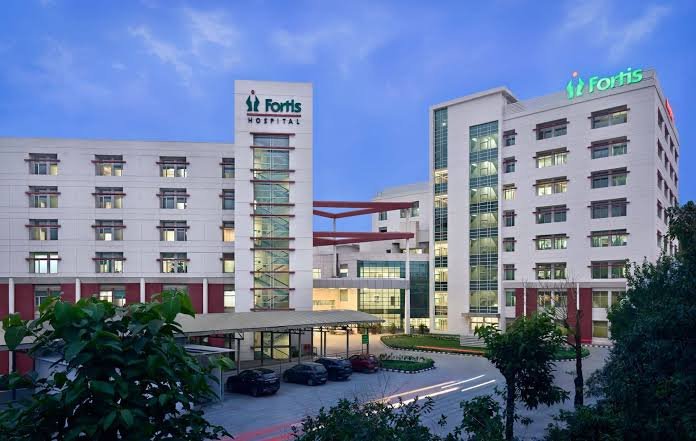
Hospital chain Fortis Healthcare has moved the Supreme Court against a Delhi High Court order directing a forensic audit into the alleged asset erosion by its former promoters, brothers Malvinder and Shivinder Singh, during enforcement proceedings by Japanese drugmaker Daiichi Sankyo.
Delhi-based Fortis, in an exchange filing on Wednesday, said it has filed a special leave petition against the High Court (HC) order dated August 31.
The HC gave the order in enforcement proceedings arising from a 2016 arbitral award of Rs 2,562 crore in favour of Daiichi, with interest.
Daiichi has claimed that the amount outstanding has since risen to around Rs 5,300 crore.
The award was passed in Singapore on April 29, 2016, and carried pre-award interest of 4.44 per cent and post-award interest of 5.33 per cent. The award has survived challenges before the Delhi HC and Supreme Court.
The HC observed that almost a decade had passed since execution proceedings began, while assets originally available to satisfy the award had progressively diminished.
The forensic audit follows a September 2022 Supreme Court judgement, which asked the Delhi HC, where execution proceedings were pending, to consider appointing auditors to examine transactions involving banks and financial institutions, as well as transactions between Fortis and RHT Health Trust.
The audit will extend beyond the brothers to banks and financial institutions involved in transactions affecting assets represented as available for satisfying the award.
Fortis, its directors and officers, company secretary, compliance officer, registrar and transfer agent, depositories, and other intermediaries will also come under scrutiny.
The HC had specifically brought the IHH Healthcare Berhad-Northern TK Venture (NTK) transaction within the scope of the forensic audit.
In November 2018, NTK acquired a 31.1 per cent stake in Fortis Healthcare through a subscription to fresh shares, with the transaction involving consideration of about Rs 4,000 crore.
The auditor will examine the structure and implementation of the IHH-NTK transaction, including approvals, regulatory filings, the movement of shares, and the flow and utilisation of the consideration.
It will also examine the subsequent transaction involving RHT Health Trust, Singapore, under which Fortis paid about Rs 4,666 crore to acquire proprietary interests in assets held by RHT.
The audit will focus on the dramatic reduction in the Singhs’ shareholding in Fortis through Fortis Healthcare Holdings (FHHPL).
FHHPL held about 71.7 per cent in Fortis when the award was passed. By September 2016, its holding had fallen to around 52 per cent, with 5.29 crore unencumbered shares.
The unencumbered holding subsequently fell sharply, with the court noting that FHHPL eventually held less than 1 per cent of Fortis.
Daiichi has contended that 32.5 million unencumbered Fortis shares — corresponding to nearly all of the 32.6 million shares identified by the Supreme Court as missing — were disposed of after assurances had been given to the court.
The Singh brothers, however, have maintained that several transactions followed the invocation of pledges by lenders or contractual top-up requirements as the value of pledged shares fell.
Banks and financial institutions have similarly argued that they dealt with shares that were already encumbered under loan and pledge arrangements.
The court has now ordered these competing explanations to be tested through a detailed examination of records.